
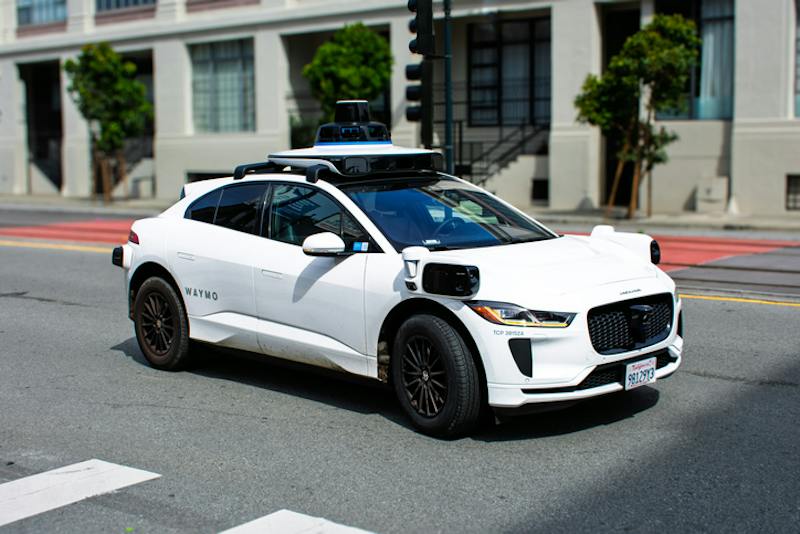
When a Waymo hits you, the company operating the self-driving vehicle is typically the party who pays, not a human driver you can point to at the scene. Arizona law treats autonomous vehicle (AV) crashes the same as any other motor vehicle collision for liability purposes: the at-fault party still owes compensation for injuries, and that party is usually the AV operator, the vehicle manufacturer, or another driver involved in the crash. As a car accident law firm in Phoenix, Big Auto Accident Attorneys has watched this technology expand across the Valley, and injury victims are increasingly asking who actually answers for a crash when no one was behind the wheel.
This confusion is understandable. Waymo has operated driverless vehicles on Phoenix roads for years, and Arizona's regulatory framework was built specifically to let that happen without requiring special permits. But "no driver" does not mean "no liability." Below, our personal injury lawyers in Phoenix break down who can be held responsible, how Arizona's AV laws work, and what to do if a Waymo — or any autonomous vehicle — leaves you injured.
Who Can Be Held Liable When a Self-Driving Waymo Causes a Crash?
Liability in a Waymo crash can fall on several different parties, and identifying the right one determines where your compensation comes from. Potential defendants include:
- The AV operating company (Waymo/Alphabet), if its automated driving system made an unsafe decision
- The vehicle or component manufacturer, if a hardware or software defect caused the crash
- A human safety monitor, if one was present and failed to intervene
- Another driver, if a third-party vehicle caused or contributed to the collision
- A maintenance or fleet-service provider, if poor upkeep of sensors or brakes played a role
Arizona's comparative negligence rules also mean liability isn't always all-or-nothing. If more than one party contributed to the crash, fault — and the resulting payout — can be divided among them.
Does Arizona Have Specific Laws for Autonomous Vehicle Accidents?
Arizona does not have a dedicated AV accident-liability statute; instead, AVs are folded into the state's existing traffic and motor vehicle safety laws. Under Executive Order 2015-09 and the follow-up Executive Order 2018-04, later codified into law through HB 2813 (2021), autonomous vehicles operating in Arizona must comply with federal motor vehicle safety standards, follow all Arizona traffic laws under Title 28 of the Arizona Revised Statutes, and maintain valid registration, licensing, and insurance just like any other vehicle. The Arizona Department of Transportation (ADOT) also requires companies operating fully autonomous vehicles without a human driver to file a Law Enforcement Interaction Plan, and ADOT can issue a cease-and-desist order if a company fails to comply.
Practically, this means an AV involved in a crash is held to the same rules of the road as a human driver — and the company operating it can face the same traffic citations and civil liability a driver would.
How Does Insurance Work in a Waymo Accident Claim?
Insurance in a Waymo claim usually runs through the AV operator's commercial liability policy rather than a personal auto policy, since Waymo — not an individual driver — owns and insures the vehicle. Arizona law requires every AV operating on public roads to carry valid insurance coverage, but the claims process against a corporate fleet operator looks different from a typical driver-to-driver claim: you're negotiating with a company's legal and claims teams rather than an individual's carrier, and the company has significant resources to dispute fault.
What Evidence Matters Most in a Self-Driving Car Accident Case?
Sensor and telematics data are the most important evidence in a self-driving car crash, since AVs like Waymo's continuously record speed, braking, steering input, and camera or LIDAR footage in the moments before impact. Manufacturers and operators of AVs are also required to report certain crashes to the National Highway Traffic Safety Administration (NHTSA) under its Standing General Order on Crash Reporting, which can create an additional paper trail. Big Auto's investigators work to secure this data quickly, before it can be overwritten or disputed, along with:
- Police and incident reports
- Witness statements
- Any available dashcam or nearby surveillance footage
- Maintenance and software update records for the vehicle
Why You Need a Phoenix Personal Injury Lawyer for a Waymo Claim
An AV crash claim is not a case to handle without a personal injury lawyer in Phoenix, because you're going up against a well-resourced company with its own legal team and its own version of the crash data. Big Auto Accident Attorneys has represented injured clients throughout the Phoenix area and understands how to request and preserve autonomous-vehicle data before it disappears, coordinate with medical providers, and negotiate against a corporate claims process built to minimize payouts. Our Phoenix car accident lawyers also work with accident reconstruction professionals when the cause of a crash isn't immediately clear.
Injured by a Self-Driving Car? Talk to Big Auto Today
A Waymo crash can leave you with the same injuries, medical bills, and lost income as any other car accident — with an added layer of complexity over who pays. Big Auto Accident Attorneys represents injured clients throughout Phoenix and the rest of Arizona, and we don't charge you anything unless we win your case. Call 1 (844) BIG-AUTO for a free case evaluation and let our team determine exactly who's responsible for your crash.
The information on this page is provided for general educational purposes only and does not constitute legal advice. Every case is different. Past results do not guarantee future outcomes.
Sources
- Arizona Department of Transportation, Autonomous Vehicles Testing and Operating in the State of Arizona
- Arizona Department of Transportation, Autonomous Vehicles Testing and Operating Without a Driver
- Arizona State Legislature, HB 2813 Bill Summary (2021)
- National Highway Traffic Safety Administration, Standing General Order on Crash Reporting