
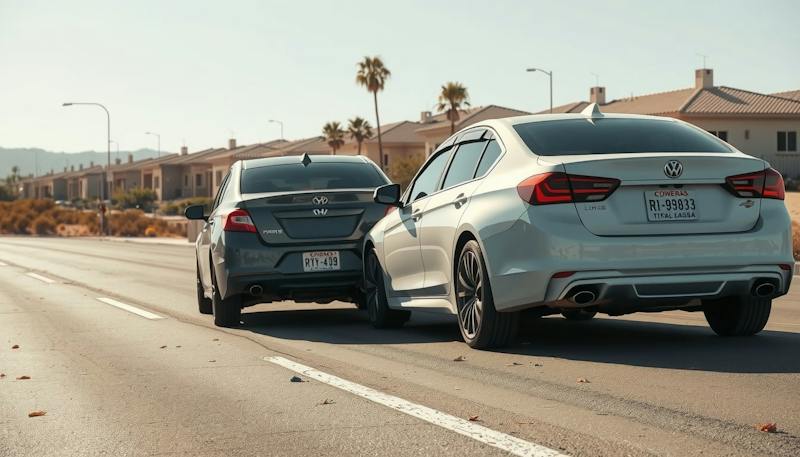
If the driver who hit you was behind the wheel for work, your claim may not stop at that individual. Their employer could share legal responsibility for your injuries, and naming an employer as a defendant fundamentally changes the scope and value of your claim.
When the Other Driver's Employer Is Liable: What Big Auto Wants You to Know
Most accident victims focus on the driver who caused the crash. That instinct is understandable, but it can leave substantial compensation on the table. When a driver is acting on behalf of their employer at the time of a crash, that employer may be equally or even primarily liable for the resulting harm.
At Big Auto, our car accident attorneys investigate every aspect of a crash, including who the driver was working for, what they were doing, and whether their employer contributed to the conditions that made the accident possible.
The Doctrine That Makes Employers Legally Responsible
The legal foundation for employer liability in car accidents is the doctrine of respondeat superior, a Latin phrase meaning "let the master answer." When an employee causes an accident while acting within the course and scope of their employment, the employer is treated as legally responsible alongside that employee.
This doctrine exists because employers benefit from their employees' work, control how that work is performed, and are in a far better position than an individual employee to absorb the cost of accidents through commercial insurance. The law places responsibility where the economic relationship puts it: on the employer.
What "Course and Scope of Employment" Means for Your Claim
Employer liability under respondeat superior requires that the employee was acting within the course and scope of employment at the time of the crash. Courts generally find this standard satisfied when:
- The employee was performing a task assigned or authorized by the employer
- They were driving a company vehicle for a work-related purpose
- They were traveling between job sites or making required work stops
- They were on a delivery, service call, or client visit
- They were conducting business on the employer's behalf, even informally
Common examples include delivery drivers, sales representatives on client calls, construction workers traveling between sites, and service technicians driving company trucks. Even employees running a work errand in their personal vehicle can create employer liability if the trip serves the employer's interests.
The Frolic and Detour Rule: When the Employer Is Not Liable
Employer liability is not automatic any time an employee is involved in an accident. Courts distinguish between two categories of deviation from assigned duties.
Detour
A "detour" is a minor deviation that still substantially serves the employer's interests, such as a slight route variation or a brief stop during a delivery. Courts generally find that the employer remains liable during a detour.
Frolic
A "frolic" is a substantial departure from employment for entirely personal purposes, such as an employee using a company car for a personal errand unrelated to any work task. During a frolic, courts typically find the employer is not liable.
The line between detour and frolic is frequently contested. Where it falls depends on the nature, extent, and purpose of the deviation, and it is often one of the most important factual disputes in employer liability cases.
Negligent Entrustment: A Separate Path to Employer Liability
Even when respondeat superior does not apply, an employer may still face liability under the doctrine of negligent entrustment. This theory holds an employer responsible for knowingly allowing an unfit driver to operate a company vehicle.
Negligent entrustment can arise when:
- The employer knew or should have known the driver had a history of traffic violations, DUIs, or prior at-fault accidents
- The employer failed to conduct background or driving record checks before assigning the employee to drive
- The employer continued to permit driving after receiving complaints about that employee's behavior
- The employer assigned a fatigued, impaired, or medically unfit driver to operate a vehicle
Negligent entrustment can apply even to off-duty accidents if the employer permitted the employee to take a company vehicle home. The employer's failure to vet its drivers creates independent grounds for liability separate from whether the employee was technically "on the clock."
Commercial Vehicles and Federal Employer Regulations
When the vehicle involved is a commercial truck, fleet van, or other commercial motor vehicle, the analysis becomes even stronger for injured victims. The Federal Motor Carrier Safety Administration requires motor carriers to verify driver qualifications, maintain detailed driver records, enforce hours-of-service limits, and ensure vehicles are properly inspected and maintained.
These obligations are codified under 49 CFR Parts 390 through 399, and a carrier's failure to comply with them can be evidence of negligence in an accident claim.
When a commercial employer violates these federal safety regulations and an accident results, that violation can constitute negligence per se. The employer is automatically deemed negligent by virtue of breaking a law specifically designed to protect the public from dangerous commercial drivers.
This substantially strengthens claims against trucking companies, delivery fleet operators, and any employer who puts commercial vehicles on public roads. Our truck accident attorneys at Big Auto are familiar with FMCSA regulations and know exactly where to look for compliance failures.
Gig Economy Drivers: When Companies Claim They Are Not Responsible
One of the most contested areas of employer liability involves gig economy drivers: rideshare drivers for Uber and Lyft, delivery drivers for DoorDash, Amazon Flex, and Instacart, and other app-based workers. These companies routinely classify their drivers as independent contractors rather than employees, which, if accepted, would significantly limit or eliminate vicarious liability.
But independent contractor status is not simply a label a company gets to assign. The U.S. Department of Labor applies an "economic reality" test to evaluate whether a worker is truly an employee or an independent contractor.
That test examines the degree of control the company exercises over the work, the worker's opportunity for profit or loss, and how integral the work is to the company's core business model.
Many courts have found that rideshare and delivery drivers function more like employees in practice, and that misclassification cannot insulate companies from liability for accidents their drivers cause. Whether liability attaches also depends on whether the driver was actively on a delivery or ride at the time of the crash, logged into the app, or between assignments.
A Big Auto attorney can investigate exactly what the driver was doing at the moment of impact and how the specific company's liability coverage applies to your situation.
Why Naming the Employer Changes the Value of Your Claim
There are two straightforward reasons why employer liability matters.
Larger Insurance Policies
First, employers carry significantly larger insurance policies than individuals. Personal auto policies often have limits of $25,000 to $100,000 per incident. Commercial policies routinely carry limits of $1 million or more. A serious injury claim against an individual driver can quickly exhaust their policy. The same claim against their employer may have adequate coverage to compensate you fully.
Assets
Second, employers have assets. An individual driver who causes a serious accident may have little beyond their policy limits. An employer, whether a local small business or a national corporation, has accounts, property, and assets against which a judgment can be collected.
What to Investigate After an Accident Involving an On-the-Job Driver
Building an employer liability claim requires moving quickly. Evidence that could establish a driver's work status and the employer's knowledge can disappear fast. Your Big Auto attorney will work to obtain:
- Employment records confirming the driver was on the clock
- GPS data, dispatch logs, and route records for the driver at the time of the crash
- Vehicle maintenance records and inspection history
- The driver's hiring file, background check, and driving record
- Prior accident reports or internal complaints involving the same driver
- The employer's commercial insurance declarations and coverage limits
Our car accident attorneys at Big Auto operate nationwide, partnering with local co-counsel who know the commercial vehicle regulations and employer liability standards in every jurisdiction. We pursue every available source of compensation so you are not left settling for what one individual's policy can cover.
If you were hit by a driver who was working at the time, your claim may be worth significantly more than you realize. Contact Big Auto for a free case review and find out whether an employer shares responsibility for what happened to you.