
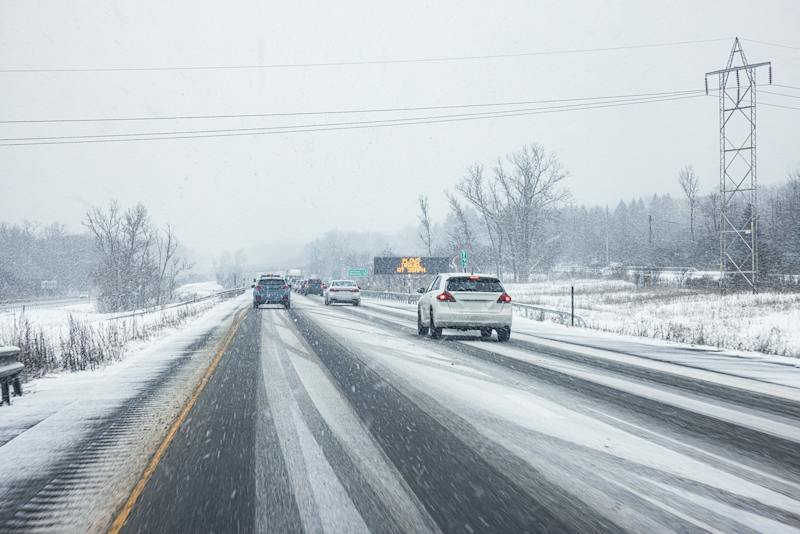
Arizona's winters draw hundreds of thousands of visitors south every year, and a share of them cause crashes on roads they've never driven before. When that happens, injured Arizona residents often assume the case works differently because the other driver lives out of state. But Arizona courts have authority over the crash, the same comparative fault rules apply, and the same filing deadline governs the claim. Here's how it actually works, and where Big Auto Accident Attorneys, which has recovered more than $50 billion for injured clients nationwide, comes in.
Can I Sue an Out-of-State Driver for a Crash That Happened in Arizona?
Arizona courts have jurisdiction over any driver, resident or not, who causes a crash on an Arizona road. If the driver can't be served directly, Arizona's nonresident motorist statute, A.R.S. § 28-2326, allows service through the director of the Arizona Department of Transportation as the driver's appointed agent. A claim like this usually also means:
- Serving the driver through ADOT's director if they can't be reached directly
- Filing suit, if needed, in the Arizona county where the crash happened
- Dealing with an insurance adjuster licensed in another state
- Tracking down witnesses, often other travelers, before they scatter
Does It Matter Who Was at Fault If the Other Driver Is From Out of State?
Fault works the same way no matter where the other driver is from. Arizona follows a pure comparative negligence system under A.R.S. § 12-2505: fault gets divided by percentage, and an injured person can still recover damages even if they were mostly at fault themselves. That holds for a visiting driver the same as a lifelong Arizona resident.
What If the Out-of-State Driver's Insurance Falls Short of Arizona's Minimums?
Arizona requires every driver to carry at least $25,000 per person and $50,000 per accident in bodily injury coverage, plus $15,000 for property damage, under A.R.S. § 28-4009. That floor doesn't necessarily apply to a policy written in another state with lower minimums, so a visiting driver's coverage may fall short. When it does, the injured person's own uninsured and underinsured motorist coverage, which Arizona insurers must offer under A.R.S. § 20-259.01, can often make up the difference, assuming the injured person opted into that coverage on their own policy.
How Long Do I Have to File a Claim Against an Out-of-State Driver?
A.R.S. § 12-542 gives injured Arizonans two years from the date of a crash to file suit, no matter where the at-fault driver lives. That window can close faster than it seems once the driver has left the state, since locating them and confirming their insurance takes time.
Why Do Snowbird Season Crashes Get Complicated Fast?
Because the usual moving parts get harder to pin down when the at-fault driver is only in town for the season. A University of Michigan Transportation Research Institute study found that in some states, out-of-state drivers account for more than four in ten drivers in fatal crashes, a pattern the researchers linked to unfamiliarity with local roads. The driver's insurer is also usually licensed elsewhere, the driver may be unreachable once they head home, and witnesses are often tourists too. Big Auto Accident Attorneys handles these cases by moving fast on evidence and witness statements, then using its national network of co-counsel attorneys to deal with an out-of-state insurer on equal footing.
Get Help With Your Snowbird Season Accident Claim
Nic Edgson, Lorraine Juarez Baudouin, and the rest of the Big Auto Accident Attorneys team have spent their careers handling cases exactly like this one, backed by more than $50 billion already recovered for injured clients nationwide. A crash caused by a visiting driver doesn't change what Arizona law entitles an injured person to, it just changes how quickly someone needs to act. Get a free, no-obligation case review today. Start your free case review, or call (844) BIG-AUTO. There's no fee unless the firm wins.
More Resources
- Bad Faith Insurance Claims: When the Insurer Owes You More Than the Policy
- Can Dashcam or Black Box Data Prove Who Caused Your Car Accident?
- What's the Difference Between a Lump-Sum and a Structured Settlement?
Sources & Citations
- A.R.S. § 28-2326, Acceptance of Rights and Privileges; Appointment for Service of Process
- A.R.S. § 12-2505, Comparative Negligence; Definition
- A.R.S. § 12-542, Injury to Person; Two Year Limitation
- A.R.S. § 28-4009, Motor Vehicle Liability Policy; Minimum Limits
- A.R.S. § 20-259.01, Uninsured and Underinsured Motorist Coverage
- Sivak & Schoettle, "Drivers on Unfamiliar Roads and Traffic Crashes," University of Michigan Transportation Research Institute