
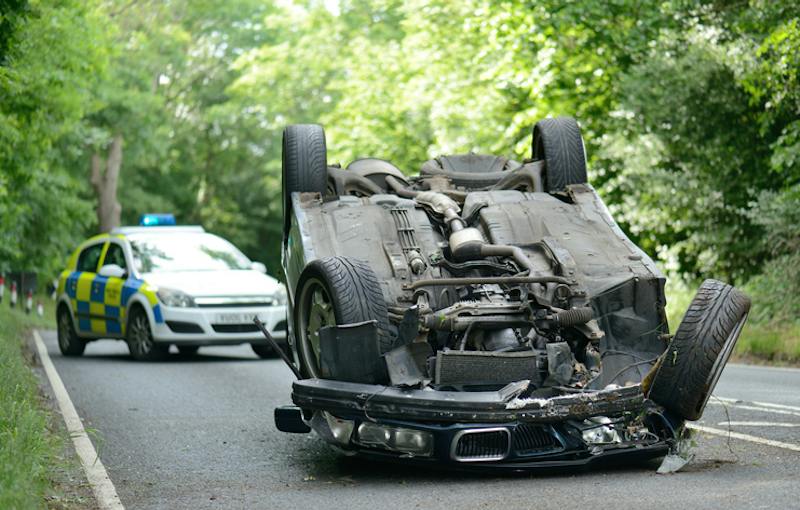
Insurers determine whether a car is totaled by comparing the cost to repair it to the vehicle's Actual Cash Value (ACV), and declaring it a total loss once that repair cost exceeds a state-set threshold. Some states use a fixed percentage, commonly between 60% and 100% of ACV, while others apply a Total Loss Formula that adds the repair cost to the salvage value and compares that sum to the ACV. Either way, the number your insurer lands on for your car's value determines your entire payout, and that number is often lower than what your car was actually worth. Big Auto Accident Attorneys helps injured clients push back on lowball total-loss offers as part of the broader claims process after a crash.
Knowing how the total-loss decision actually works, and what tools exist to challenge it, puts you in a much stronger position than simply accepting the first number an adjuster offers.
How Do Insurers Decide a Car Is a Total Loss?
Insurers decide a car is a total loss by running one of two calculations, depending on the state. In Total Loss Threshold (TLT) states, if the estimated repair cost exceeds a set percentage of the vehicle's ACV — the threshold ranges from roughly 51% to 100% depending on the state — the insurer must declare it totaled. In Total Loss Formula (TLF) states, the insurer adds the repair estimate to the vehicle's salvage value; if that combined number exceeds the ACV, the car is totaled. Either method relies heavily on two inputs an insurer controls: the repair estimate and the ACV. Common issues that lead to disputes include:
- The valuation report lists the wrong trim level or is missing factory options
- Comparable vehicles used to calculate ACV are in worse condition or a different market
- Mileage or prior-damage adjustments are applied incorrectly
- The repair estimate is inflated or deflated to hit a particular outcome
How Is Actual Cash Value (ACV) Calculated?
ACV is calculated by comparing your vehicle to similar cars recently sold in your local market, then adjusting for mileage, condition, options, and any pre-existing damage. Insurers typically rely on third-party valuation platforms to generate this number, and small errors in the inputs — an incorrect trim, an unlisted option package, an outdated mileage figure — can shift the final ACV by thousands of dollars. Because the insurer selects the comparable vehicles and inputs the data, the resulting number tends to favor a lower payout unless you review it closely.
What If You Disagree With the Insurer's Total Loss Valuation?
If you disagree with a total loss valuation, most auto insurance policies give you the right to invoke the appraisal clause, a contractual process for resolving value disputes. Under this clause, you and the insurer each select an independent appraiser; if the two appraisers can't agree, they jointly select a neutral umpire to decide the final number. According to Washington's Office of the Insurance Commissioner, the insurer owes you the actual cash value of a totaled vehicle, and if you and the insurer can't agree on that value, the insurer must follow the state's specific total loss rules for resolving the dispute — a structure most states' insurance regulators mirror in some form. The appraisal clause only applies to disputes over a vehicle's value, not to disputes over fault or coverage, but it's one of the strongest tools available to challenge a lowball total-loss offer without going to court.
Can You Recover Diminished Value on a Repaired Vehicle?
Yes, if your car was repaired rather than totaled, you may still be entitled to a diminished value payment for the resale value it lost simply from having an accident on its history. The National Association of Insurance Commissioners recognizes diminished value as a legitimate category of loss distinct from a total-loss valuation, and it applies even when repairs are done well, since buyers routinely pay less for a vehicle with a documented accident history. Diminished value claims are separate from total loss claims and require their own supporting documentation.
Steps to Take If Your Car Was Declared a Total Loss
If your insurer declares your car a total loss, a few early steps protect your ability to challenge the number if it's too low:
- Request the full valuation report, not just the final dollar figure
- Compare the listed trim, mileage, and options against your actual vehicle
- Gather your own comparable listings from local dealers as a cross-check
- Ask in writing whether the insurer used a Total Loss Threshold or Total Loss Formula
- Invoke the appraisal clause in writing if the gap between your evidence and the offer is significant
Why You Should Hire a Lawyer for a Disputed Total Loss Claim
A disputed total-loss valuation often overlaps with a broader injury claim, and Big Auto Accident Attorneys handles both together so the property-damage fight doesn't get lost while medical treatment is still ongoing. Our team reviews valuation reports, pushes back on incomplete comparables, and coordinates the appraisal process when an insurer won't move off an unfair number.
Think Your Total Loss Offer Is Too Low? Call Big Auto
If your car was totaled and the number your insurer offered doesn't match what you know the vehicle was worth, Big Auto Accident Attorneys can help you challenge it as part of your overall claim. We don't get paid unless you do. Call 1 (844) BIG-AUTO for a free case evaluation.
The information on this page is provided for general educational purposes only and does not constitute legal advice. Every case is different. Past results do not guarantee future outcomes.
Sources
- National Association of Insurance Commissioners, Automobile Diminished Value Claims — Journal of Insurance Regulation
- Washington State Office of the Insurance Commissioner, What Happens After Your Car Gets Totaled